
www.electronics-usa.com
21
'26
Written on Modified on
Unified x86 Deep Learning Optimization for PyTorch
AMD and Intel integrate ZenDNN optimizations into oneDNN to establish a unified open-source software pipeline for PyTorch across x86 processors.
www.intel.com
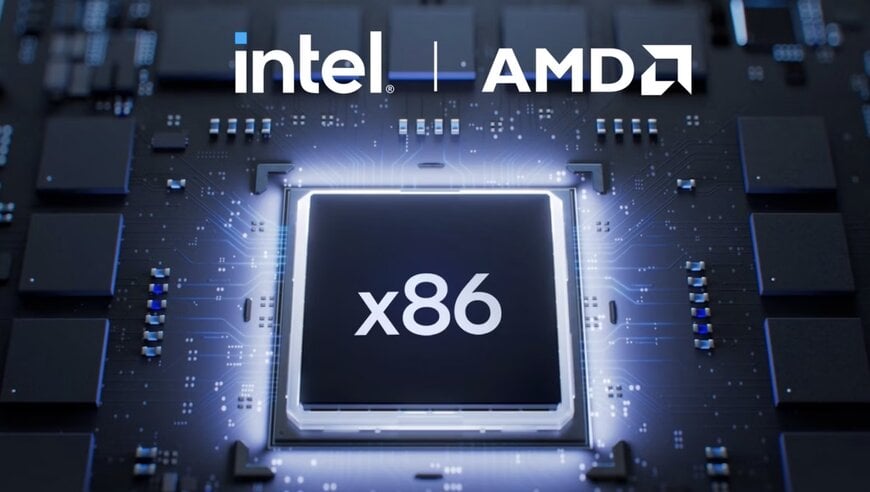
AMD and Intel are collaborating to unify their x86 central processing unit optimization efforts for PyTorch within oneDNN, an open-source deep learning library governed by the Unified Acceleration Foundation. The initiative establishes a consolidated software execution path for artificial intelligence workloads running on enterprise server and client computing hardware.
Software Fragmentation in Processor Ecosystems
Artificial intelligence deployments on host computing infrastructure frequently encounter software divergence between competing processor microarchitectures. Historically, distinct optimization libraries—such as Intel oneDNN and AMD ZenDNN—required independent software engineering pipelines, dedicated maintenance overhead, and custom build flags within machine learning frameworks. This division complicated application delivery and delayed runtime optimizations across mixed computing deployments. Acting on a recommendation from the x86 Ecosystem Advisory Group, both companies are addressing this architectural friction by establishing a single accelerated software baseline.
Library Consolidation and Technical Architecture
The technical collaboration designates oneDNN as the default open-source acceleration engine for x86 architectures within PyTorch. AMD is upstreaming its ZenDNN optimizations directly into the oneDNN repository, aligning runtime execution paths, memory layouts, and compute kernels. In parallel, AMD has joined the Unified Acceleration Foundation as a Steering Member to maintain technical governance and development standards.
Consolidating deep learning primitives within oneDNN standardizes low-level operator acceleration across various instruction sets, including Advanced Vector Extensions. Deep learning inference and training operations compiled through PyTorch will invoke shared kernel implementations that dynamically interface with underlying hardware architectures. Furthermore, both engineering teams are collaborating on AI Compute Extensions, a next-generation instruction set architecture targeting accelerated matrix multiplication operations. Future microcode and hardware support for AI Compute Extensions will be surfaced directly within PyTorch through ongoing oneDNN updates.
Cross-Platform Deployment and Operational Impact
Consolidating acceleration routines within a shared runtime environment eliminates vendor-specific code branches for enterprise development teams. AI practitioners build, validate, and package PyTorch container images using standard repository wheels, ensuring deterministic performance across heterogeneous x86 data center clusters. This common foundation streamlines continuous integration workflows, lowers code maintenance requirements, and accelerates the operational rollout of subsequent x86 matrix execution features.
Edited by Romila DSilva, Induportals Editor, with AI assistance.
www.intel.com
