
Envalior launches halogen-free flame-retardant PBT for demanding applications
Pocan BFN4135 offers a PFAS-free formulation matching the mechanical properties of conventional halogenated PBT compounds.
www.envalior.com
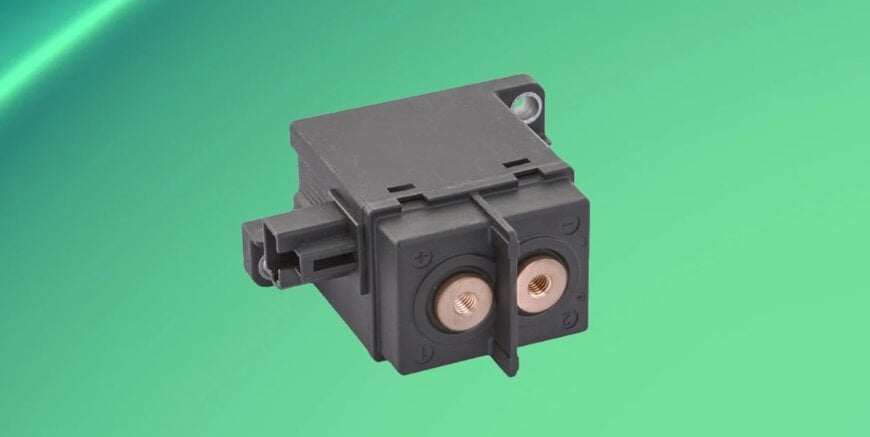
Envalior has introduced Pocan® BFN4135, a next-generation halogen-free and PFAS-free flame-retardant polybutylene terephthalate (PBT). This breakthrough grade is the first in a new product family that successfully closes the mechanical performance gap, delivering tensile strength and elongation at break comparable to traditional halogenated PBT compounds. Designed to future-proof manufacturing against tightening environmental, health, and workplace safety regulations, the material provides long-term investment security for critical electrical components like connectors, housings, and bobbins.
Seamless tooling integration and high-voltage safety
Engineered as a direct drop-in replacement for 30% glass-fiber reinforced halogenated PBT, Pocan® BFN4135 exhibits virtually identical shrinkage behavior. This allows processors to utilize existing injection molding tooling without costly modifications or significant parameter adjustments. In addition to high mechanical resilience (2.4% elongation at break) that prevents stress cracking, the compound achieves a UL 94 V-0 flammability rating at a wall thickness of just 0.75 mm. With a Comparative Tracking Index (CTI A) of 450—and future grades targeting the maximum 600—the material is highly suited for high-voltage DC applications, including fast-charging infrastructure and AI data centers. Furthermore, it exhibits minimal viscosity fluctuations in hot-runner systems, enabling highly stable manufacturing conditions with reduced scrap rates.
Additional Context: Halogen-free flame retardancy and Comparative Tracking Index (CTI)
This section details polymer chemistry and electrical tracking physics not included in the original press release.
In polymer chemistry, traditional halogenated flame retardants (utilizing bromine or chlorine) operate primarily in the vapor phase by releasing free radicals that aggressively quench the combustion chain reaction. However, they can produce toxic, corrosive smoke and face increasing regulatory bans due to environmental persistence (PFAS concerns). Halogen-free alternatives, such as metal phosphinates or nitrogen-based intumescent systems, operate largely in the condensed phase. When exposed to extreme heat or open flame, they trigger a chemical reaction that promotes rapid char formation on the polymer's surface. This carbonaceous char layer acts as a physical thermal barrier, insulating the underlying plastic and blocking the release of combustible gases.
Regarding electrical safety, the Comparative Tracking Index (CTI) measures a polymer's resistance to "electrical tracking"—the dangerous formation of conductive carbonized paths on the surface of an insulator caused by high-voltage arcing in the presence of moisture and contaminants. Halogen-free formulations typically lack the easily carbonized aromatic structures found in many brominated systems, inherently granting them higher CTI values. Achieving a high CTI rating allows electrical engineers to significantly reduce the "creepage distance" (the shortest path along the insulator surface between two conductive parts), which is a critical design parameter for safely miniaturizing high-voltage power supplies in modern AI server racks.
Edited by an industrial journalist, Lekshman Ramdas, with AI assistance.
www.envalior.com
